Strings
Search & filters


General info
John Blood’s friendship with Michael Alexander, for whom this sonata was written, dates back to their music making in Secondary School and later, when they were both students, at the Royal Academy of Music. Michael was leader of the second violins in the Ulster Orchestra for many years and is still one of their principle players.
The sonata reflects the personal idiosyncrasies and memories, likes and dislikes, of such a long and rewarding friendship. The first movement is on a large scale, full of shifting moods and with an unsettling sense of urgency. This is followed by a deeply felt slow movement and the sonata finishes with an Armageddon Galop that has, amongst other things, idiotic Christian soldiers vying with Beethoven’s Prometheus as the human race dances gleefully towards its oblivion!



General info
A long time favourite with many quartets, this arrangement captures the wonerful invention of Ponchielli’s delightful masterpiece.

General info
Written November 1982. An enigmatically haunting theme is followed by eight variations which skilfully exploit the sonorities of the sextet, and display remarkable verve and versatility.



General info
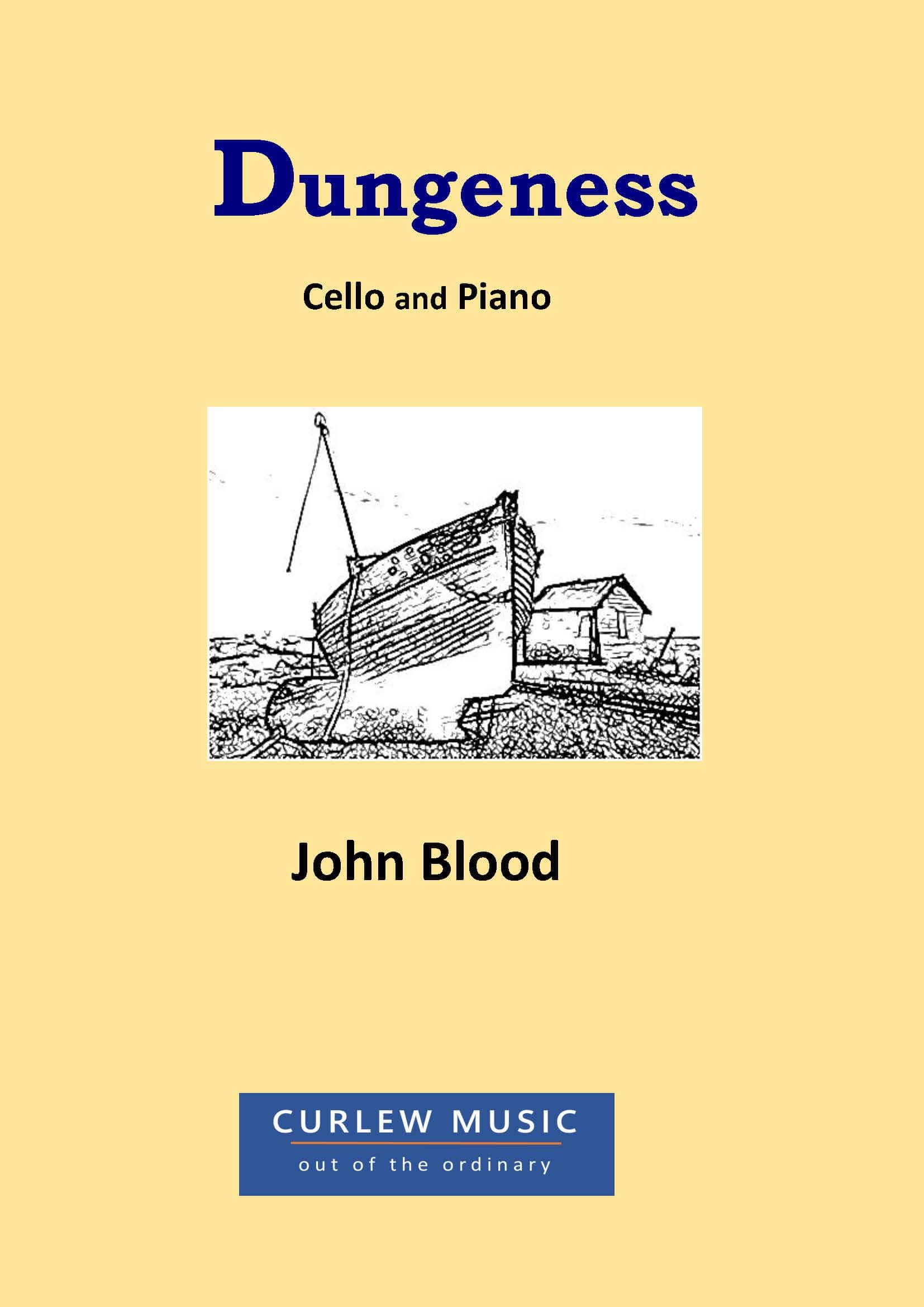
Composed for cellist Nicolas Robinson, who persuaded the composer to visit Dungeness. The resulting piece, a cello sonata in all but name, portrays the sounds and colours of this amazing landscape. The rich textures abound in nautical reels and shanties, and the piece ends with a Presto agitato movement depicting the whirring turbines of the nuclear power station. The first performance was given by Nicolas Robinson (cello) and John Blood (piano) on 10th October 2010, as part of Art in Romney Marsh 2010. A highly rewarding concert piece.
Movements
Dark skies
Spring tide
Grey afternoon
Turbines

General info
A modern concerto grosso in three movements. Commissioned by the Esterházy Orchestra, and first performed at their inaugural concert in the Banqueting House, Whitehall, in October 1985, conducted by John Blood. Broadcast on BBC Radio 3 in 1987 by the Ulster Orchestra, conducted by Vernon Handley.


General info
Cello and piano | Grades 1-3 technical level | Duration: 18 minutes
All manner of astral bodies are visited in this wide-ranging voyage through space. Each piece is in the form of a march, but the eight marches have very different characters, ranging from the chirpy confidence of A frisky asteroid to the funeral lament of The dying star. This composer being an accomplished cellist, these pieces show an intimate understanding of the problems and possibilities of the instrument at this level.
Movements
A frisky asteroid
The lonely planet
The eight moons of Neptune
Orion’s Nebula
Helios Hyperion – The jolly sun god
Cygmus X-26 – The laughing satellites
Giant black hole
The dying star